Strony

Showing posts with label history. Show all posts

Tuesday, March 17, 2015

V&A Fashion Institute


On Saturday, in Victoria & Albert Museum in London the exhibition of Alexander McQueen's works "Savage Beauty" that has been awaited for weeks was finally opened. Because of the fact, it was impossible to transport some of the showpieces out of London, this event is enriched when compared to the previous event that took place in New York in 2011. Unfortunately, I didn't manage to organize my trip the way that let me see the exhibits, although, I visited V&A exactly a month before the event - on the Valentine's Day. 
We were after a few hours of wandering the alleys of Natural History Museum and my sister's goal was to get to the Hyde Park as soon as possible, however, I couldn't just skip the V&A since we already were on Cromwell Road. The museum itself really impressed me - the amount of gathered masterpieces from all over the world and from most of the periods amazes and sometimes even overwhelms. For me, a real treat was finding the Fashion Institute. 
The showpieces are presented in glass cabinets chronologically, according to the ages - from gowns with huge frame-based bottoms and tight corsets to the works of the most famous designers of 20th century that had become the fashion symbols of previous decades. 
When my sister refused to keep walking and found herself a comfy bench in the hall, I was running with a camera from case to case to shoot as many objects as possible. And that's when something that was quiet incredible for me happened. When I started the blog, one of the first articles was the one about the history of fashion (you can find it here). I placed there a picture of a dress by Jeanne Lanvin and noted in my little black book "the original is nowadays in Victoria & Albert Museum in London". So, when being there, when I was finally done with taking pics of an evening outfit with a Chanel label on it, still looking through the camera, I perceived those familiar golden linings, fabric and cut and froze for a second. It was exactly the dress I put in my post a year ago!
Sadly, that day we had no time for further exploring the assets of that building but now, knowing what treasures it contains and having the best memories from that place I'm pretty sure I'll be back there. Soon, hopefully. 


W sobotę w londyńskim Victoria & Albert Museum otwarto długo wyczekiwaną wystawę prac Alexandra McQueen'a - Savage Beauty. Ze względu na to, że niektórych eksponatów nie można było transportować poza Londyn, jest ona znacznie bogatsza niż ta w nowojorskim Met w 2011 rkou. Składa się z 241 eksponatów i już przyciągnęła tysiące odwiedzających. Mi niestety nie udało się tak dopasować terminów, żeby być jednym z nich, jednak w samym V&A byłam dokładnie miesiąc przed otworzeniem wystawy - w Walentynki.
Byłyśmy już po kilkugodzinnym zwiedzaniu sąsiedniego Natural History Museum, a moja siostra myślami biegała już po Hyde Parku, jednak będąc na Cromwell Road nie mogłam tak po prostu przejść obok V&A. Samo muzeum naprawdę robi wrażenie - ogrom zbiorów z praktycznie wszystkich części świata i większości epok nieustannie zachwyca, momentami wręcz przytłacza. Dla mnie jednak prawdziwa gratka zaczęła się, gdy odnalazłyśmy Fashion Institute.
Gabloty rozłożone na planie koła przedstawiają odwiedzającym kreacje chronologicznie, według epok - od sukien z ogromnymi spódnicami na stelażach i ciasnymi gorsetami, haftowane w fantazyjne wzory, po prace najsłynniejszych projektantów XX wieku, będące wizytówkami ubiegłych dziesięcioleci. 
Kiedy moja siostra na dobre zaprzyjaźniła się już z jedną z nielicznych ławek, ja biegałam z aparatem od ściany do ściany uwieczniając kolejne eksponaty. I wtedy stało się coś, co - choć może wydawać się dość błahym zdarzeniem - dla mnie było prawdziwie niesamowite. Jednym z pierwszych postów na blogu był ten o historii paryskiej mody (możecie przeczytać go tutaj). Umieściłam w nim wtedy zdjęcie  sukienki zaprojektowanej przez Jeanne Lanvin, a w notesie zapisałam, że "dziś oryginały znajdują się w Victoria & Albert Fashion Institute w Londynie". Będąc tam, kiedy skończyłam już fotografować kilkudziesięcioletni kostium z metką Chanel, patrząc ciągle przez obiektyw aparatu, zauważyłam znany fason, tkaninę, złote linie i na sekundę zamarłam, widząc dokładnie tę sukienkę, której zdjęcie zamieściłam we wpisie rok temu!
Plan tego dnia nie pozwolił nam na dalsze zwiedzanie, jednak teraz wiedząc, co kryje się w budynku muzeum i mając stamtąd najlepsze wspomnienia jestem pewna, że jeszcze się tam pojawię. Mam nadzieję, że jak najszybciej.


Gablota w sekcji koreańskiej / Gowns in the Korean section


Od prawej: płaszcz Alexander McQueen, sukienka i żakiet Dries van Noten, sukienka Jean Paul Gaultier/
From right to left: Alexander McQueen Coat, Dries van Noten look, Jean Paul Gaultier dress


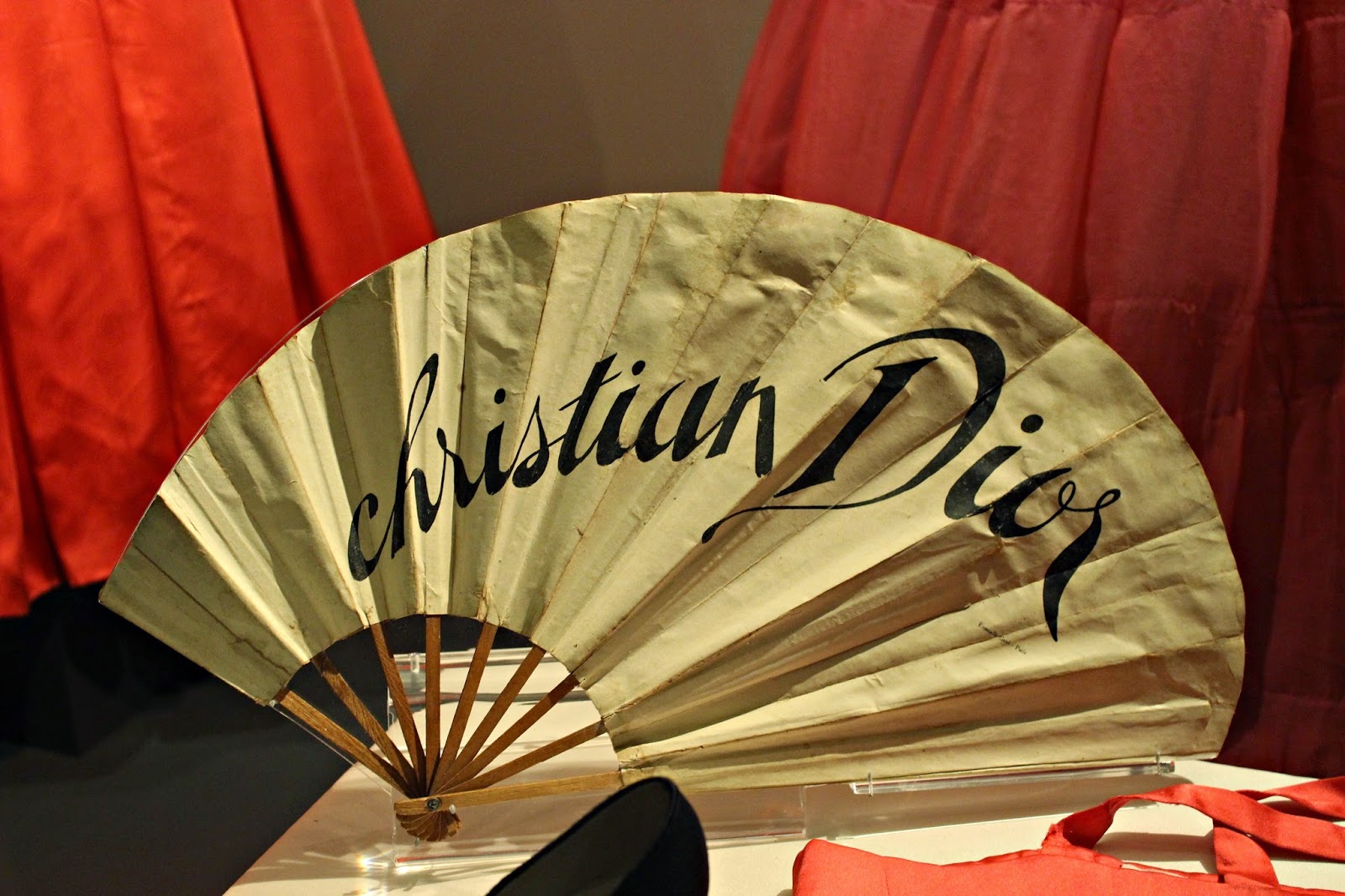
New Look by Christian Dior


Po prawej kostium wieczorowy projektu Coco Chanel, a po lewej to właśnie sukienka Jeanne Lanvin - powód mojej dzikiej euforii i lekkiego zawału. / On the right, evening look by Coco Chanel. On the left, dress by Jeanne Lanvin; the reason of my wild euphoria and a little heart attack. 


Projekty Elsy Schiaparelli / Designes by Elsa Schiaparelli


Wydanie Vogue'a z 1927 roku / Issue of Vogue from 1927


London, 14.02.2015
Photos Marta & Natalia Lipke

Wednesday, April 09, 2014

Look back in time - post by Oskar


Have you ever wondered about origins of certain items of fashion? After all in the beginning clothes used to be just protection from cold and hostile environment, way to survive, display your tribal or religious allegiance or just to cover your junk in case someone else had it bigger. Nowadays however they mostly became the opposite – way to show that you have more ‘style’, ‘sense of fashion’ or, lacking those, money. It could be quite interesting to discover largely practical origins of some of the everyday pieces of attire.


1. Sleeve Cuffs

While it is difficult to pinpoint the exact point in history when adding extra layer of fabric to the end of a shirt became acceptable, it is clear that they were used as early as XV century, with renaissance taking hold and transforming fashion sense.

 
“Look at her. Her dress is soooo middle ages”

Early examples of dealing with sleeves ends differ considerably from modern elegant shirts, with being worn strictly as a way to distance your expensive outer-worn coats and jackets from your filthy, and I mean bathe-twice-a-year-filthy, sweaty, smelly body. At this point sleeves cuffs where usually tied using pieces of string, often just wrapped around wrists.  


Decorative cuffs were a marriage between practicality and flashiness. First examples of sleeves recognizable by modern audiences were used in soldiers uniforms, when it became quite apparent that waving your sabre and reloading your musket while wearing long puffy sleeves was somewhat difficult.


Weird. It doesn’t seem like laughable matter.


In civilian use point of origin seems to be London and its famous Savile Row, which before it became fashion center it is today used to be occupied by doctors. Their “uniform” was white shirt and trademark coat (distinguishing them from lower order of tradesmen), and they sought a way to tend to their blood and fecal matter spouting “clients” without removing their attire. With cuffs on the end of their sleeves they could just roll them up and get to work.

London tailors to this day make this kind of shirts and coats, often with detachable and replaceable cuffs.


2. Tie


Necktie is an interesting piece of fashion, considering that it serves absolutely no other function apart from visual decoration. It doesn’t hold anything up, offers no protection from the environment, it certainly is not comfortable and not even slightly proportional to dick size, which could at least be informative to the ladies. Yet it is one more of the most prominent element of modern day’s men elegant outfit.

First examples of piece of cloth worn around necks once again come from soldiers. First depictions of modern tie predecessor come from famous terracotta army commissioned by emperor Qin Shih Huang, which depicts emperors honor guard wearing pieces of cloth around their necks.


             And even then they didn’t seem too happy about this “tie” business


However, lacking any other kind of written, painted or sculpted source from this era confirming usage for neckties, it is generally believed, that those were more like insignia of elite unit of emperor’s protectors. Similar is the case with neck wrap depicted on Rome’s emperor Trajan’s column, then again it’s argued that those were used simply as scarfs more than ornaments.

Definitive source of tie being fashion element comes from mid XVII century France, when during 30 years war king Louis XIII commissioned some Croatian mercenaries and brought them to France. 

I’ll resist the urge to point it out with huge arrow.


When Louis XIV came to power this piece of clothing became quite popular amongst ever-so-dandy French courtiers eager to mimic their King who worn lace neckties since he was seven. From there it spread across courts of Europe and just somehow “caught on”.  French called this new element “cravat” which comes directly from words Croatia, Croat, and Croatian pronunciation “hrvati”.

Still it’s weird how popular ties became, to the point in which even high risk (of being strangled) jobs like industrial workers, law enforcement, heavy machine operators etc. prefer to wear clip-ons rather than wearing none at all.  


Come on punk, make my afternoon.


3. High Heels


History of heels is surprisingly ancient, almost as ancient as shoes themselves. They can be seen depicted as early as ancient Egypt when they were seemingly symbol of high social and/or religious status. In ancient Greece approach was more practical, as they were used by butchers that preferred risk of twisted ankles to wading through blood and gore covering shop’s floor, or by actors to better signify importance of portrayed characters
.
In more modern (read XV century) times it become quite commonplace to wear shoes with wooden and high soles simply to distance yourself from mud, dirt and debris covering the ground, which in times with no plumbing seems far less extravagant than nowadays. Finally they were used by short people not to look so short. Hey, I never promised you’d be amazed by this article.


To compensate – here are freaking 29 inches venetian chopines. Yes, the bit at the top is where you put your feet.


Those were however all more of a platform shoes; in search of more common design of heels, we must visit Persia (today known as Iran), well known in XVI century for its fearsome cavalry. Those soldiers lived and died on horseback and, in order to focus more on living part of that sentence, had to work out ways to make themselves as effective as possible. They quickly noticed, that standard wooden-soled shoes worn while keeping feet in stirrups developed grooves that kept warriors more steady, and able to stand up more surely (to shoot arrows), so they began to put those grooves in from the start.

From there, simple development of the idea led to invention of heeled shoes that remained unchanged in men’s-wear to this day. 

Well, almost.


From there, with expansion of Persian diplomatic relations with Europe, and European fascination with this new oriental culture, this new item merged with already well -established desire to look leaner and taller (for whatever reason) and led to creation of high-heeled shoes we all know and, as I’m told, love. Anyway, if you’re a man, next time you curse your uncomfortable heeled shoes think that at one point in time they served a purpose of making killing easier. And if you are a woman, look again at those venetian monstrosities and stop complaining.